

Fact Sheet FS336
Lead in Our Environment
Lead is a naturally occurring element found in soils at low concentrations. Elevated levels of lead are usually due to contamination. Living systems have no known biological use for lead, and exposure to elevated concentrations of lead can cause human health problems.
Gardening or playing where soils are contaminated with lead can result in toxicity in humans. Lead can be transferred from the soil when inhaled as soil dust or when directly ingested. While few persons deliberately eat soil, young children, especially toddlers, are at the greatest risk for accidentally ingesting soil and dust, since they have heightened hand-to-mouth activity. The United States Center for Disease Control and Prevention (CDC) has indicated that lead poisoning is one of the most common, but also preventable, childhood environmental health issues facing our country today. New Jersey law requires physicians to screen all children for elevated blood lead levels.
Specific Health Concerns
Children are more sensitive than adults to lead exposure since their brains and bodies are quickly developing, and can absorb and retain high percentages of lead. Extremely high levels of lead in the blood (80 μg/dL) are rare in this country but can cause coma and death. The consequences of moderate levels of exposure to ingested lead (10 to 40 μg/dL) include neurological damage, lowered IQ, learning disabilities, decreased stature and may be associated with delinquency.
One problem with moderate lead poisoning (10 to 40 μg/dL blood lead) is that the symptoms are not unique to lead exposure and can be mistaken for other illnesses. Children with blood lead levels in this range may develop deficiencies in speech and language processing, attention and classroom performance.
The Centers for Disease Control and Prevention has recognized "that a blood lead of 10 μg/dL did not define a threshold for harmful effect", which means that even blood lead levels less than 10 μg/dL may cause adverse health effects. New Jersey state law requires physicians to screen children between the ages of 12 and 24 months for blood lead levels. Blood levels greater than 20 μg/dL lead to notification of health and human services personnel. Chelation therapy is recommended for blood lead levels greater than 45 μg/dL.
Children are not the only ones affected. Lead exposure can cause similar neurological health problems for adults. Fetuses are also at risk, because lead can be transferred from the mother. Nursing mothers can deliver lead through breast milk.
Pollution Sources
Some soils were polluted long ago by lead. Leaded gasoline contained tetraethyl lead as an antiknock agent for many years; this was volatilized in engines and emitted from tailpipes. Lead was deposited along streets and highways until lead use in gasoline was prohibited in the United States, in 1986. Lead from automobile emissions is estimated to have resulted in four million metric tons of lead falling onto the ground. Lead tends to bind to soil particles, and despite the years that have passed, lead remains near the soil surface, unless the soil is disturbed. It is not surprising that levels of lead in soil near highways are often elevated.
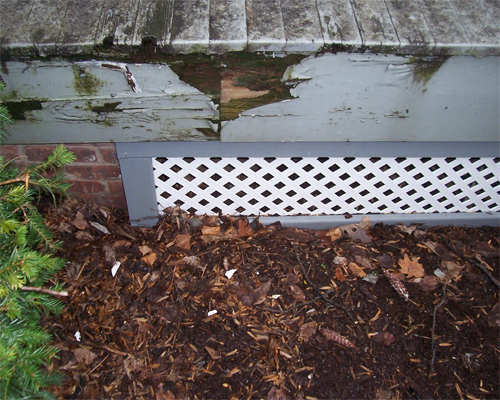
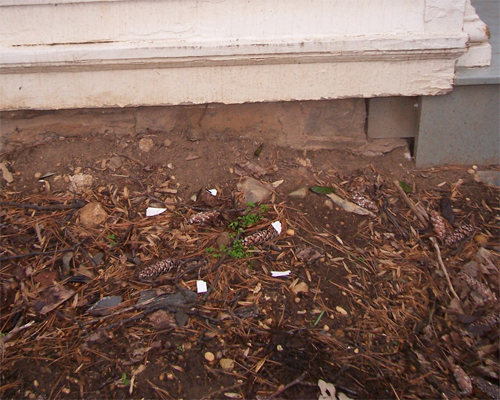
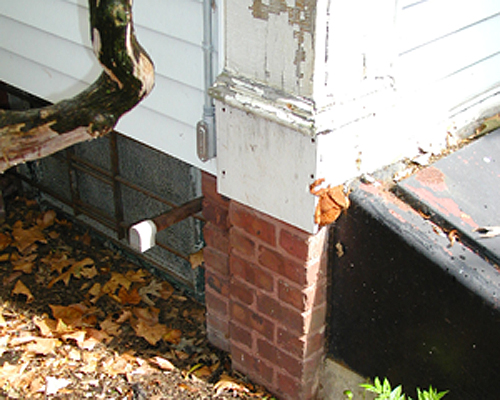
Soils around older homes and buildings are often contaminated from lead-based paints that have since chipped away and fallen to the ground. Paint used before the 1950s may be composed of up to 50% lead. Scraping of this paint can result in flaked leaded paint chips mixing with the soil, or, if indoors, landing on floors and carpets. Soil containing leaded paint chips and dust contaminated with lead are major sources of accidentally ingested lead. U.S. government regulations began to restrict the concentration of lead in paint in the 1960s and finally banned lead-containing residential paints in 1978.
Another source of lead pollution originated from the usage of lead arsenate and other lead compounds as pesticides in fruit orchards and on other crops, until the 1950s. Construction of houses in new developments is sometimes on this contaminated farmland. Children who play in these soils may be exposed to lead.
Soil Testing
Soil testing can help to identify lead as a problem and whether actions to minimize exposure are necessary. If you suspect high levels of lead in the soils around your home, you may desire to have the soil tested for lead. A soil test for lead gathers different data than a standard soil fertility test, though both are needed to give clues as to how to address lead contamination. Rutgers University Soil Testing Laboratory and other laboratories perform a soil test for lead, and also have helpful websites:
Soil Testing Laboratory
Rutgers, The State University of New Jersey
New Jersey Agricultural Experiment Station
P.O. Box 902
Milltown NJ 08850
732-932-9295
njaes.rutgers.edu/soil-testing-lab
University of Delaware Soil Test Program
149 Townsend Hall
Newark, DE 19717-1303
extension.udel.edu/dstp/
Agricultural Analytical Services Laboratory
Pennsylvania State University
University Park, PA 16803
814-863-0841
www.aasl.psu.edu
| US EPA Lead Soil Test1 | Mehlich-3 Soil Test Lead (ppm)2 | Interpretation and Action |
|---|---|---|
| 0–100 | 0–47 | Soil test is at background levels. It is still a good idea to follow the strategies listed below to protect children's health. |
| 101–300 | 47–202 | Soil has elevated levels of lead, though below the recommended action limits. Follow the strategies to protect children's health, listed below. |
| 301–400 | 202–278 | Soil test indicates that there is significant contamination with lead. Follow strategies to protect children's health, listed below. It is suggested that children sunder the age of six, who may have been repeatedly exposed to the soil be tested for blood lead level and be examined by a physician. |
| Greater than 400 | Greater than 278 | This is the New Jersey Department of Environmental Protection soil clean-up criterion for residential soil. It recommends that children under the age of six, who may have been repeatedly exposed to the soil, be tested for blood lead level and be examined by a physician. Vegetables for consumption should not be grown in this soil. |
1The formula for conversion: (US EPA soil test lead) = 1.4 x (Mehlich-3 soil test lead) + 41.
2Parts per million (mg Pb/kg soil).
How to Collect a Soil Sample
Collect the soil sample from the site of concern. If you choose to have more than one area tested (for example, from the garden and also from under the swing set), it is important that you do not combine samples from different sites. Doing so may alter the results of the tests and not indicate the actual amount of lead at any of the sites.
At each site, take 8 to 12 sub-samples of the area, to get a representative reading. Take samples from the surface 3-inches of soil because lead is generally concentrated near the surface. Mix thoroughly the sub-samples together in a clean, plastic pail. Take a cupful of the mixed soil to send to the laboratory in the container that is provided.
Soil Test Data
There are two tests for lead, either of which can be used to determine if a soil has high lead levels. The official US EPA (United States Environmental Protection Agency) test uses concentrated acid to determine total lead. An alternate method is the Mehlich-3 soil extraction test, which can be performed inexpensively by a soil testing laboratory. We have correlated Mehlich-3 soil test lead to the US EPA lead1, so either test can be used to describe the associated risks in Table 1, so either test can be used to describe the associated risks.
Strategies to Minimize Exposure to Protect Health
Absorption of ingested lead by the human body depends on several factors, including the concentration of the lead in the ingested soil or dust, the amount of soil or dust that is ingested, and the overall nutrition of the person who is exposed. The following factors should be addressed to minimize adverse health effects from lead exposure:
Test for Lead
First, and most importantly, a blood test should be done for young children, a blood test should be done for young children, and repeated at a later time, if the child lives in an older home or near a highway. Then determine the extent of lead contamination in and around your home by testing for lead. Children with high levels of blood lead may be exposed to lead from other places, especially from indoor sources, including water pipes. Determine the source of lead before spending time and money for soil clean-up.
Strategies for Outdoor Activities
If the soil is the source of lead, soil removal may be too expensive, so preventing access to lead in the garden or play areas can provide a safe environment for children. Try the following strategies to minimize exposure:
- Plant shrubbery or sod along house walls of older homes, and along the street site of previous contamination by leaded gasoline, to limit access to lead in soils.
- Grow only flowers, ornamental plants, or turfgrass in areasthat have lead levels too high for vegetable gardening, to prevent exposure to humans. Wear gloves while working in these soils.
- Do not allow children to play in areas of bare soil that arecontaminated with lead. Play areas should be covered with turfgrass and any bare spots should be sodded. Sod provides rapid turfgrass establishment and a thin layer of new soil at the surface. Turfgrass also prevents the generation of dust.
- Bare play areas, such as those under a swing set, can also be covered with woodchips, mulch, or clean sand.
- Replace old sand in the sandbox.
Prevent Lead Contact When Vegetable Gardening
The concentration of lead in soil that presents a health threat to gardeners is not well established and needs further research. Generally, it has been considered safe to use garden produce grown on soils with U.S. EPA test total lead less than 400 parts per million (ppm) (which is equivalent to 278 ppm Mehlich-3 soil test lead). The following are suggestions to manage lead exposure:
- Locate your garden far away from busy highways and older painted structures.
- Relocate the vegetable garden to an uncontaminated site, or use raised beds filled with uncontaminated soil. (If soil is brought in as replacement, first have it tested for lead.)
- Keep dust at a minimum by maintaining a moist soil and using mulch in the garden.
- Keep the soil pH from being acidic to prevent uptake of lead into vegetables. Maintain pH of 6.5 to 7.0 to help minimize absorption of lead by plants. In general, plants themselves do not absorb or accumulate large amounts of lead, but when they do, the soils usually test acidic. Liming the soil decreases soil acidity and lead availability.
- Do not eat the oldest and outer leaves of vegetables, particularly in leafy vegetables such as lettuce or Swiss chard. High lead concentrations are most likely to be found in leafy vegetables.
- Grow vegetables that pose low risk from lead contaminationincluding fruiting crops such as tomato, sweet corn, squash, eggplant, or peppers.
- Wash vegetables carefully to remove soil and dust deposits and peel all root crops. Unpeeled root crops such as potatoes or carrots are likely to have soil attached to them and may lead to accidental ingestion of lead-contaminated soil.
Soil Maintenance Strategies
Problems can be minimized using the following techniques:
- Have soil tested for fertility and soil pH every two to three years.
- Maintain soil fertility and a pH of 6.5 to 7.0.
Fertilize the lawn and garden with adequate amounts of nitrogen, phosphorus, and potassium, and apply lime, as recommended by standard fertility test results. A soil fertility test service is available to New Jersey residents through Rutgers Cooperative Extension. Sample kits may be obtained at County Extension offices for a nominal charge. The local Rutgers Cooperative Extension is listed in phone books under county government and on the internet at njaes.rutgers.edu.
Prevent Indoor Contact with Lead
Consider strategies to prevent indoor contact with lead. Lead sources can be indoors, from peeled paint in older homes, or lead dust can be tracked into the house, where small children crawl and play. High levels of hand-to-mouth activity, when compared to older children and adults, increase the amount of soil and dust that small children ingest. Dust lead levels inside the house have correlated to children’s blood lead levels.
- Avoid transporting soil into the house on shoes and clothing. Remove garden gloves outside and designate a storage place (out of the reach of children) for them in a shed or garage. To keep contaminated soil outside of the house, ask family members to remove their shoes by the door, and/or use an abrasive fiber doormat.
- Frequent vacuuming or mopping can decrease the amount of dust lead in a home, particularly in the summertime, when windows and doors are often open. Minimize levels of soil lead in the house by regular cleaning of surfaces, especially windowsills and floors.
- Carpeting has been shown a reservoir for leaddust. Consider replacing wall-to-wall or area carpeting if your child has been diagnosed with elevated levels of blood lead.
Nutritional Factors
Examine nutritional factors, particularly for children. Proper nutrition can reduce the impact of lead ingestion, and is a prevention strategy for lead toxicity. Adequate iron, calcium and vitamin C appear to be very important. Research has shown that diets low in iron and calcium allow higher absorption of lead, and diets low in vitamin C allow increased absorption of lead into the bones.
- Consult your doctor, pediatrician or nutritionist about a proper diet or the use of vitamin and mineral supplements that may aid in lessening the impact of lead exposure, as well as improve general health.
Summary
Lead is naturally occurring in our environment at low concentrations, but lead accumulated from long-ago use of lead-containing paint, fuel and insecticides may still be impacting the health of humans, many years after the ban of these products in the U.S. Outdoor activities of gardening or playing where soils are contaminated with lead can result in toxicity in humans, with children being more sensitive than adults. Absorption of lead by the human body depends on several factors. These include concentration of lead in soil and housedust, the amount of these two that are ingested, the age of the exposed person, and the overall nutrition of that person. By taking appropriate actions, the negative human health impacts from lead exposure can be mitigated.
References
- (2005) CDD. Preventing lead poisoning in young children. Atlanta, GA: US Department of Health and Human Services.
- Hamel S.C., J.R. Heckman, K.L. Shilke-Gartley, and B. Hoskins. (2003) Lead Extraction on Using Three Soil Fertility Tests and Environmental Protection Agency Method 3050. Communications in Soil Science and Plant Analysis, 34: 853-2873.
- Yiin, L.M. (1999) Childhood Lead Exposure: Effectiveness of Cleaning Intervention and Influences of Seasonality and Home Floor-Surfacing Types, Doctoral Dissertation, Rutgers, The State University of New Jersey.
- Soil Test Notes # 17-Managing Lead Contaminated Soils, Karen Gartley, University of Delaware, Soil Test Laboratory, Newark, DE, 1998.
- Soil Clean-Up Criteria, last revised 7/11/96, New Jersey Department of Environmental Protection Cleanup Standards for Contaminated Sites, N.J.A.C. 7:26D.
- Mielke, H.W. (1994) Lead in New Orleans Soil: New Images of an Urban Environment, Environmental Geochemistry and Health, 16(3/4): 123.
- (1991) Centers for Disease Control and Prevention, Preventing Poisoning in Young Children, Atlanta, GA: US Department of Health and Human Services.
- Goyer, R.A. (1991) In: Cassarett’s and Doull’s Toxicolgy, (Eds.) Amdur MO, Doull J, Klassen CD, Pergamon Press: New York, 4th ed., pp. 639-646.
Photo Captions
Page 1, photo 1, 2 & 3: peeling lead-based paint can add paint chips as well as lead dust from eroded paint and past sanding to the adjacent soil. Photo credits, page 1: Joseph Heckman (1-2); Joseph T. Ponessa (3).
May 2010
Copyright © 2024 Rutgers, The State University of New Jersey. All rights reserved.
For more information: njaes.rutgers.edu.
Cooperating Agencies: Rutgers, The State University of New Jersey, U.S. Department of Agriculture, and Boards of County Commissioners. Rutgers Cooperative Extension, a unit of the Rutgers New Jersey Agricultural Experiment Station, is an equal opportunity program provider and employer.