

Bulletin E263
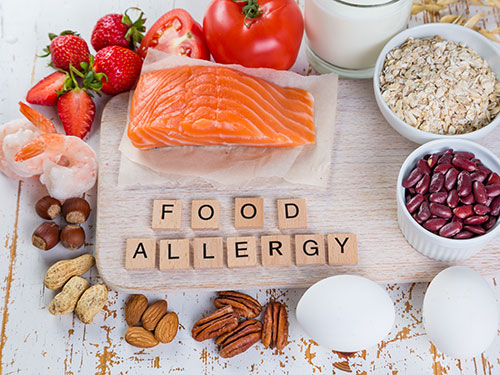
A visual display of major food allergens.
Food allergies are more than just an unpleasant reaction – they involve the immune system misidentifying certain food proteins as harmful. This triggers a cascade of immune responses, including the release of histamine, which can cause symptoms ranging from mild hives to severe anaphylaxis.
In the U.S., about 33 million people have at least one food allergy (roughly 1 in 10 adults and 1 in 13 children), and many children have multiple allergies. Reactions can be unpredictable, and at their most severe, life-threatening. Knowing the signs, how to respond, and how allergies are diagnosed and managed can prevent harm and save lives. This fact sheet explains what food allergies really are, how they differ from food intolerances, what symptoms to watch for, and what steps to take if a severe reaction occurs.
Important Note
This fact sheet is for educational purposes and not a substitute for personalized medical advice. For diagnosis and treatment, consult a board certified allergist or your healthcare professional. If you suspect an emergency related to an allergic reaction, call 911.
What Is a Food Allergy?
A true food allergy happens when the immune system reacts to a food protein (the "allergen") as if it were harmful. This type of reaction is called immune mediated, meaning the body's defense system is involved. Most food allergies are IgE mediated, which means the immune system makes a specific antibody called immunoglobulin E (IgE). When a person eats the allergen, IgE triggers the release of chemicals like histamine, leading to symptoms that can range from mild hives to life threatening anaphylaxis.
This is different from a food intolerance, which does not involve the immune system or IgE. Intolerances (such as lactose intolerance) stem from difficulties digesting certain foods and typically cause symptoms like gas, bloating, or stomach discomfort, not anaphylaxis.
- Food Allergy: Involves the immune system; often IgE related; symptoms appear quickly and can include anaphylaxis.
- Food Intolerance: Involves the digestive system; symptoms like gas or bloating; no risk of anaphylaxis.
Which Foods Commonly Cause Allergies? (Top 9)

A person carefully reads a Nutrition Facts Label to check for potential allergens while shopping.
In the U.S., nine major allergens must be declared on packaged food Nutrition Fact Label: milk, egg, fish, crustacean shellfish, tree nuts, peanuts, wheat, soy, and sesame. Sesame became the ninth major allergen in 2023 under the FASTER Act. Always read ingredient lists carefully, older products or bulk items may not yet reflect updated labeling.
- Importances of Checking Every Time: Food manufacturers can change ingredients, suppliers, or production processes without notice. Because of this, it's important to read the ingredient list and allergen statement every time you buy a product, even if you've eaten it safely before. If anything on the label is unclear, you can contact the manufacturer or distributor listed on the package to verify whether the product is safe.
- Unpacked Foods: Labeling rules for foods sold without packaging, such as bakery items, deli goods, or bagels in open bins, can vary. If you're unsure, ask store staff for allergen information before purchasing.
- Understanding "Contains" vs. "May Contain": These statements help consumers identify allergens and assess cross-contact risk.
- "Contains" statements are mandatory when a product includes any of the major allergens as ingredients. For example, if a food contains whey, egg yolks, and a flavoring with peanut protein, the label must state: Contains milk, egg, peanuts.
- "May Contain" or "Produced in a facility" statements are voluntary and are used when there is a possibility of cross contact, meaning small amounts of an allergen could accidentally transfer into the product. Cross contact can happen when the same equipment is used to make both products with an allergen and products without that allergen. For Example, a facility that produces cookies with peanuts and cookies without peanuts on the same equipment. Even with cleaning procedures, tiny amounts of peanut protein could remain on the equipment. In this case, a label might say: "May contain peanuts" or "Produced on shared equipment with peanuts."
| Allergen | Common Ingredients | Possible Sources |
|---|---|---|
| Milk | Casein, whey, lactose, butter, cream | Cheese, yogurt, baked goods, processed meats |
| Egg | Albumin, egg yolk, egg white | Mayonnaise, baked goods, pasta, sauces |
| Fish | Anchovy, cod, salmon, tuna | Sauces , throat)e.g., Worcestershire), dressings, soups |
| Crustacean Shellfish | Crab, lobster, shrimp | Seafood dishes, soups, sauces |
| Tree Nuts | Almond, walnut, cashew, pecan, hazelnut, pine nuts | Nut butters, desserts, granola, pesto |
| Peanut | Peanut flour, peanut oil | Candy, baked goods, sauces, snack bars |
| Wheat | Gluten, semolina, farina | Bread, pasta, cereals, sauces |
| Soy | Soy protein, soy lecithin, tofu | Processed foods, baked goods, sauces |
| Sesame | Sesame seeds, tahini, sesame oil | Hummus, breads, crackers, dressings |

An individual discusses menu options to ensure the meal aligns with his food allergy needs.
How Much Food Can Trigger a Reaction?
The amount of food needed to trigger an allergic reaction varies greatly from person to person. For individuals who are highly sensitive, even a small amount – such as half a peanut – can cause symptoms. Severe reactions have been reported from inhaling cooking vapors, opening a food package, or kissing someone who recently ate the allergen. In rare cases, children have reacted when milk was splashed on their skin.
While most people are not this hypersensitive, it is important to understand that trace exposure can be dangerous for some individuals. Reactions can also change over time. In some cases, repeated exposures may lead to stronger immune responses, meaning that an amount that caused mild symptoms in the past may trigger a more serious reaction in the future. This is another reason why avoiding known allergens and following safety precautions is so important.
How Serious Can Food Allergies Be?
Food allergy reactions range from mild discomfort to life-threatening emergencies. Children with both food allergies and asthma face a higher risk of severe reactions. Peanuts are among the most common triggers for anaphylaxis, which can be fatal if not treated immediately. Hospitalizations for food allergy have tripled since the 1990s, and deaths from food-induced anaphylaxis outnumber those from insect stings. Because reactions can escalate quickly, prompt use of epinephrine and emergency care are critical.Common Symptoms of Food Allergies
Symptoms typically begin within minutes to hours after eating the trigger food. Reactions can affect multiple body systems, including the skin, respiratory tract, gastrointestinal tract, and cardiovascular system. In medical terms, signs are things that can be observed by others (such as hives or wheezing), while symptoms are experiences a person reports (such as itching or chest tightness). Food allergies can cause both.Common signs and symptoms include:
| Affected part of the body | Immediate Signs (observable) | Immediate Symptoms (felt/reported) | Delayed Signs & Symptoms |
|---|---|---|---|
| Skin | Hives; redness; rash; swelling of skin or tissues | Itching | Same as immediate; may include eczema‑like rash or flushing |
| Eyes | Redness; tearing; swelling around eyes | Itching | Same as immediate |
| Upper Respiratory (nose, throat) | Nasal congestion; runny nose; sneezing; hoarseness | Itching of nose or throat; sensation of throat tightness | — |
| Lower Respiratory (lungs) | Wheezing; visible shortness of breath; persistent cough | Chest tightness; feeling short of breath | Same as immediate |
| Gastrointestinal (oral) | Swelling of lips, tongue, or palate | Itching or tingling in the mouth | — |
| Gastrointestinal (stomach/intestinal) | Vomiting; diarrhea | Nausea; abdominal pain | Same as immediate; may include bloody stool, irritability, or food refusal with weight loss (young children) |
| Cardiovascular | Low blood pressure; rapid heartbeat (sometimes slow heartbeat in anaphylaxis); fainting | Dizziness; feeling faint or lightheaded | — |
| Other | — | Uterine cramping; sense of "impending doom" | — |
| Source: Adapted from the National Institute of Allergy and Infectious Diseases "Guidelines for the Diagnosis and Management of Food Allergy in the United States" (page 10). | |||
Severity varies from mild to severe. In anaphylaxis, serious symptoms can recur after apparent improvement (biphasic reaction), which is why emergency care and observation are critical. Sensitivity varies widely. Trace amounts can trigger reactions in highly sensitive individuals. Avoidance of the known allergen remains the cornerstone of prevention.
Anaphylaxis: How to Recognize and Respond
Anaphylaxis is a severe, rapid, multi‑system allergic reaction that can be fatal without immediate treatment. Key features may include throat tightness/wheezing, severe vomiting/diarrhea, hypotension or fainting, and rapid progression.How Is a Food Allergy Treated?
There is currently no cure or vaccine for food allergies, so prevention and careful allergen avoidance remain essential. Because exposures can happen in different settings, the steps you take may vary:Emergency Treatment
Long-Term Options
Who Is Qualified to Diagnose and Treat Food Allergies
Managing food allergies requires expertise because reactions can be serious and nutrition needs must be met safely. The professionals below play key roles in care and prevention:
- Board-certified allergists diagnose and manage food allergies; they perform allergy tests and guide treatment plans.
- Registered Dietitians or Certified Nutrition Specialists help ensure nutritional adequacy and safe substitutions during elimination diets.
How Is a Food Allergy Confirmed?
Diagnosis isn't based on symptoms alone, it requires a careful review and testing by a qualified allergist. If you suspect a food allergy, start by keeping a food diary and schedule an appointment. Your allergist will review your history and may recommend one or more of these tests:
- Skin prick testing (SPT): In office, results in 15–30 minutes; indicates sensitization, not severity.
- Blood (specific IgE): Measures food specific IgE; positive results does not mean a clinical allergy; severity cannot be predicted.
- Oral food challenge (OFC): Gold standard, gradual supervised ingestion to confirm or rule out allergy; performed by trained clinicians in a medical setting.
Food allergy testing isn't always straightforward. Several factors can complicate interpretation and lead to confusion:
Frequently Asked Questions
- Can a food allergy be inherited?
Yes. Genetics can influence the likelihood of developing allergies, but children do not usually inherit a specific food allergy. Instead, they may inherit a tendency toward allergic conditions in general. A child may develop a food allergy even if neither parent has allergies. If one parent has an allergic condition, the child's risk of developing an allergy is higher. If both parents have allergies, the child's risk is higher still, although the type of allergy may not be the same. - Is there any way to prevent food allergies in children?
Research shows early introduction of certain allergenic foods, such as peanuts, during infancy can significantly reduce the risk of developing allergies later. Always consult your pediatrician before introducing allergenic foods, especially if your child has eczema or other risk factors. - Will my child outgrow a food allergy?
Many children outgrow allergies to milk, eggs, or soy by school age. Peanut, tree nut, fish, and shellfish allergies are less likely to resolve, children may outgrow peanut allergy by age 8. - What other conditions are linked to food allergies?
Children with food allergies are more likely to develop asthma, eczema, or other allergic diseases over time. Persistent ear infections may also be associated with food allergies, ask your doctor if this could be a factor. - What is cross-reactivity?
Cross-reactivity occurs when someone allergic to one food also reacts to a related food, such as shrimp and crab, cow's milk and goat's milk, or peanuts and other legumes. This can make creating a safe diet more challenging. - Could I be allergic to a food additive?
True allergic reactions to additives are rare. Sulfites, used as preservatives in foods and drinks like wine, can trigger symptoms in sensitive individuals, especially those with asthma. Other additives, such as MSG or certain colorings, may cause reactions in some people, but these are usually sensitivities, not true allergies. - Are fruits and vegetables likely to cause allergic reactions?
True fruit and vegetable allergies are uncommon and are usually mild, often causing itching or swelling in the mouth. Many cases are related to PFAS, where people with pollen allergies react to certain raw fruits or vegetables because the proteins are similar. Symptoms typically improve when the food is cooked, since heat changes these proteins. Some individuals may also react to fruits such as banana, avocado, kiwi, or chestnut due to latex–fruit cross reactivity. People with latex allergy can experience allergic symptoms from these foods because latex and certain plant foods contain similar proteins. Not everyone with latex allergy reacts to these foods, but it's helpful to be aware of the connection. - Can processing foods make them less allergenic?
For most allergens, heating or other processing does not eliminate risk. Some people tolerate baked milk or egg, but this varies. Manufacturers can reduce allergenicity in certain foods (e.g., wheat flour treated with enzymes), but these products are "hypoallergenic," not allergen-free. Processing is more effective for intolerances, such as adding lactase to milk for the lactose intolerant.
Caregiver Quick Action Checklist
When a child or loved one has a food allergy, every moment counts during a reaction. Caregivers play a critical role in prevention and emergency response. A clear, actionable plan reduces panic and ensures the right steps are taken quickly. The checklist below highlights essential actions to recognize symptoms, prepare for emergencies, and prevent accidental exposure.
Learn More and Take Action
Food allergies are complex and potentially life-threatening, but with the right knowledge and preparation, you can reduce risks and respond effectively. Awareness and planning are key to keeping yourself or your loved ones safe. For additional information and resources, visit:
References
- American College of Allergy, Asthma & Immunology. (n.d.). Food allergy testing and diagnosis.
- Allergy & Asthma Network. (n.d.). Food allergy treatment and management.
- Allergy & Asthma Network. (n.d.). Latex allergy foods.
- American Academy of Allergy, Asthma & Immunology. (2025). Allergic to the fine print: Food allergy to additives.
- Bonadio, W., Welsh, C., Pradarelli, B., & Ng, Y. (2024). Impact of treatment on rate of biphasic reaction in children with anaphylaxis. Western Journal of Emergency Medicine, 26(1).
- Capobianco, I., Di Vincenzo, F., Puca, P., Becherucci, G., Mentella, M. C., Petito, V., & Scaldaferri, F. (2024). Adverse food reactions in inflammatory bowel disease: State of the art and future perspectives. Nutrients, 16(3), 351.
- Czarnecka, K., Pilarz, A., Rogut, A., Maj, P., Szymańska, J., Olejnik, Ł., & Szymański, P. (2021). Aspartame—True or false? Narrative review of safety analysis of general use in products. Nutrients, 13(6), 1957.
- Daley, S. F., Lopez, C. M., & Mendez, M. D. (2025). Food allergies. In StatPearls [Internet]. Treasure Island (FL): StatPearls Publishing.
- Food Allergy Research & Education. (2024, April). Food allergy facts and statistics for the U.S. (PDF).
- Foong, R. X., du Toit, G., & Fox, A. T. (2017). Asthma, food allergy, and how they relate to each other. Frontiers in Pediatrics, 5, 89.
- Golden, D. B. K., Wang, J., Waserman, S., Akin, C., Campbell, R. L., Ellis, A. K., … Bernstein, J. A. (2023). Anaphylaxis: A 2023 practice parameter update (PDF).
- Igbinedion, S. O., Ansari, J., Vasikaran, A., Gavins, F. N., Jordan, P., Boktor, M., & Alexander, J. S. (2017). Non-celiac gluten sensitivity: All wheat attack is not celiac. World Journal of Gastroenterology, 23(40), 7201–7210.
- Kamath, S. D., Bublin, M., Kitamura, K., Matsui, T., Ito, K., & Lopata, A. L. (2023). Cross-reactive epitopes and their role in food allergy. Journal of Allergy and Clinical Immunology, 151(5), 1178–1190.
- Kok, M., van der Valk, J. P. M., & Dubois, A. E. J. (2021). Thresholds for allergenic foods: Clinical implications and challenges. Current Opinion in Allergy and Clinical Immunology, 21(3), 279–285.
- National Institute of Allergy and Infectious Diseases. (2010). Guidelines for the diagnosis and management of food allergy in the United States: Report of the NIAID-sponsored expert panel. NIH Publication No. 11-7699.
- National Institute of Allergy and Infectious Diseases. (2024). Introducing peanut in infancy prevents peanut allergy into adolescence.
- National Institute of Diabetes and Digestive and Kidney Diseases. (n.d.-a). Lactose intolerance.
- National Institute of Diabetes and Digestive and Kidney Diseases. (n.d.-b). Definition & facts for celiac disease.
- U.S. Food and Drug Administration. (n.d.). Food allergies. In Nutrition, food labeling, and critical foods.
- U.S. Food and Drug Administration. (2013, January). Guidance for industry: Food labeling guide.
- U.S. Food and Drug Administration. (2024). FDA approves first medication to help reduce allergic reactions to multiple foods after accidental exposure.
- U.S. Food and Drug Administration. (2025, January 14). Learn about the FASTER Act with new resources from FDA [Press release]. PR Newswire.
- Upton, J. E. M., Wong, D., & Nowak-Wegrzyn, A. (2024). Baked milk and egg diets revisited. Annals of Allergy, Asthma & Immunology, 132(4), 328–336.e5.
Contributing authors to the original publication include:
Mention or display of a trademark, proprietary product, or firm in text or figures does not constitute an endorsement by Rutgers Cooperative Extension and does not imply approval to the exclusion of other suitable products or firms.
February 2026
Copyright © 2026 Rutgers, The State University of New Jersey. All rights reserved.
For more information: njaes.rutgers.edu.
Cooperating Agencies: Rutgers, The State University of New Jersey, U.S. Department of Agriculture, and Boards of County Commissioners. Rutgers Cooperative Extension, a unit of the Rutgers New Jersey Agricultural Experiment Station, is an equal opportunity program provider and employer.